Darts Match

project overview
Darts Match
project type
Game
year
2016
my role
Art Director | UX / UI | Modeling
platform
iOS | Android
Darts Match Live is a follow up to Darts Match a small single player proof of concept game. The goal was to take the fundemental throwing mechanic and expand it into a live service game heavily focusing on PVP play. This later evolved into the official PDC mobile title, PDC Darts Match.
Darts Match Live is a follow up to Darts Match a small single player proof of concept game. The goal was to take the fundemental throwing mechanic and expand it into a live service game heavily focusing on PVP play. This later evolved into the official PDC mobile title, PDC Darts Match.
Darts Match Live is a follow up to Darts Match a small single player proof of concept game. The goal was to take the fundemental throwing mechanic and expand it into a live service game heavily focusing on PVP play. This later evolved into the official PDC mobile title, PDC Darts Match.
Prototyping and Ui Implimentation
As a live service title, Darts Match has undergone multiple redesigns over the past decade. My approach has focused on refreshing the visual style and user experience to remain relevant for new players, while preserving the core structure to maintain familiarity for long-term users. With a broad global audience ranging from ages 17 to 55, it has always been essential to keep the interface bold, clear, and universally accessible.
As a live service title, Darts Match has undergone multiple redesigns over the past decade. My approach has focused on refreshing the visual style and user experience to remain relevant for new players, while preserving the core structure to maintain familiarity for long-term users. With a broad global audience ranging from ages 17 to 55, it has always been essential to keep the interface bold, clear, and universally accessible.
As a live service title, Darts Match has undergone multiple redesigns over the past decade. My approach has focused on refreshing the visual style and user experience to remain relevant for new players, while preserving the core structure to maintain familiarity for long-term users. With a broad global audience ranging from ages 17 to 55, it has always been essential to keep the interface bold, clear, and universally accessible.
All screens and features began as interactive prototypes to explore user flows, interactions, and animation. I created multiple iterations and combined player feedback with informed design judgment to shape an experience that felt intuitive, familiar, and enjoyable for players.
All screens and features began as interactive prototypes to explore user flows, interactions, and animation. I created multiple iterations and combined player feedback with informed design judgment to shape an experience that felt intuitive, familiar, and enjoyable for players.
All screens and features began as interactive prototypes to explore user flows, interactions, and animation. I created multiple iterations and combined player feedback with informed design judgment to shape an experience that felt intuitive, familiar, and enjoyable for players.
Once the prototypes were finalised, I progressed to high-fidelity designs and implemented the UI using Unity’s UGUI system, with LeanTween used to drive animations and transitions.
Once the prototypes were finalised, I progressed to high-fidelity designs and implemented the UI using Unity’s UGUI system, with LeanTween used to drive animations and transitions.
Once the prototypes were finalised, I progressed to high-fidelity designs and implemented the UI using Unity’s UGUI system, with LeanTween used to drive animations and transitions.


To minimize draw calls across a wide range of mobile devices—from lower-end to modern handsets—the majority of screens were driven by a single sprite sheet. Once the screens were functioning correctly, I developed custom editor optimisation tools to replace duplicated sprites and consolidate assets from multiple folders into a single core sprite sheet, improving performance and maintainability.
To minimize draw calls across a wide range of mobile devices—from lower-end to modern handsets—the majority of screens were driven by a single sprite sheet. Once the screens were functioning correctly, I developed custom editor optimisation tools to replace duplicated sprites and consolidate assets from multiple folders into a single core sprite sheet, improving performance and maintainability.
To minimize draw calls across a wide range of mobile devices—from lower-end to modern handsets—the majority of screens were driven by a single sprite sheet. Once the screens were functioning correctly, I developed custom editor optimisation tools to replace duplicated sprites and consolidate assets from multiple folders into a single core sprite sheet, improving performance and maintainability.
We used a separate stacked camera to render 3D particle effects, 3d models etc where needed.
We used a separate stacked camera to render 3D particle effects, 3d models etc where needed.
We used a separate stacked camera to render 3D particle effects, 3d models etc where needed.
Environments & 3D Modeling
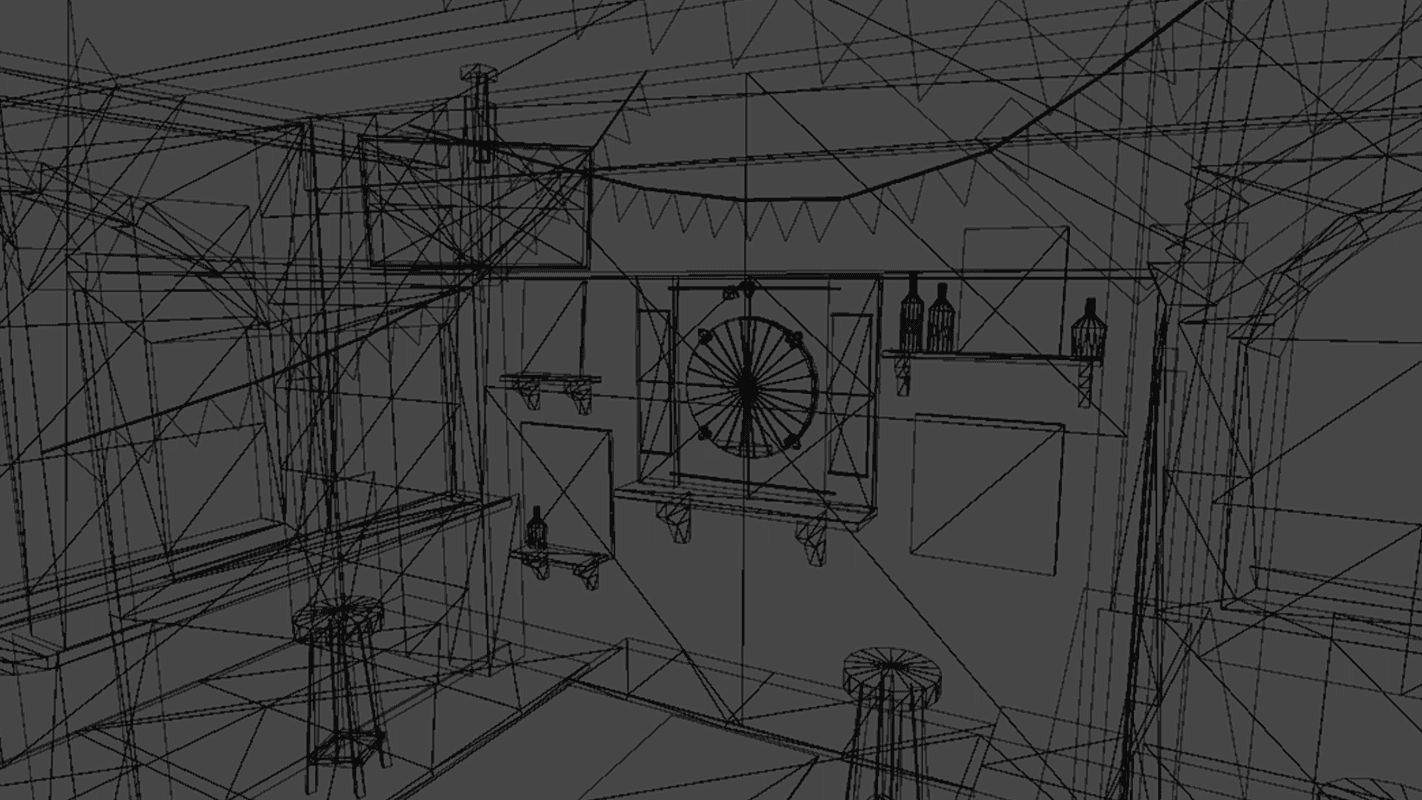
I modeled all environments, dart components, and boards using Maya, with textures created in Photoshop and Substance. To optimize performance and maintain visual flexibility, dart pieces were designed using RGB mask textures, allowing multiple in-game variations to be generated from a single texture through dynamic color swapping. Environment lighting was fully baked to enhance mobile performance, ensuring smooth gameplay while preserving high visual quality.
I modeled all environments, dart components, and boards using Maya, with textures created in Photoshop and Substance. To optimize performance and maintain visual flexibility, dart pieces were designed using RGB mask textures, allowing multiple in-game variations to be generated from a single texture through dynamic color swapping. Environment lighting was fully baked to enhance mobile performance, ensuring smooth gameplay while preserving high visual quality.
I modeled all environments, dart components, and boards using Maya, with textures created in Photoshop and Substance. To optimize performance and maintain visual flexibility, dart pieces were designed using RGB mask textures, allowing multiple in-game variations to be generated from a single texture through dynamic color swapping. Environment lighting was fully baked to enhance mobile performance, ensuring smooth gameplay while preserving high visual quality.


Outcome
Darts Match has achieved the Number 1 and Number 2 positions in the Darts category and has featured multiple times in the iOS Top 10 Free-to-Play games. The game continues to grow, successfully attracting and retaining both new and existing players.
Darts Match has achieved the Number 1 and Number 2 positions in the Darts category and has featured multiple times in the iOS Top 10 Free-to-Play games. The game continues to grow, successfully attracting and retaining both new and existing players.
Darts Match has achieved the Number 1 and Number 2 positions in the Darts category and has featured multiple times in the iOS Top 10 Free-to-Play games. The game continues to grow, successfully attracting and retaining both new and existing players.

